COUNTRY RESEARCH DOSSIER / HONG KONG
HONG KONG · FEBRUARY 2025 · GOVERNANCE / RULE OF LAW / INSTITUTIONAL TRUST
How do political institutions shape the way citizens understand accountability and trust?

FIELD PHOTOGRAPH 01
Hong Kong · February 2025
重慶大廈(Chungking Mansions) is a dense commercial and residential complex in Tsim Sha Tsui. Known for its mix of guesthouses and restaurants, it offers a striking example of how migration, commerce, and everyday life intersect within a single urban space.
The Question I Arrived With
Before arriving in Hong Kong, I tended to understand governance through its visible structures: elections, laws, courts, and political institutions. If I could identify those structures, I assumed I could understand how a political system functioned.
Hong Kong complicated that assumption. I became interested in what accountability means when formal institutions tell only part of the story. How do citizens decide whether an institution deserves their trust?
I arrived not looking to decide whether a political system was simply “good” or “bad,” but to investigate the distance between institutional design and lived experience.

Questions I Investigated
01 / GOVERNANCE & ACCOUNTABILITY
What makes a government accountable beyond the existence of formal political institutions?
My conversations led me to examine transparency, political participation, institutional responsiveness, and the relationship between citizens and government.
02 / RULE OF LAW
How does the interpretation and enforcement of law shape the boundaries of political participation?
Questions surrounding the Basic Law, national security legislation, legal interpretation, and freedom of expression pushed me to think beyond what a law says toward how legal boundaries are defined and experienced.
03 / CIVIL SOCIETY
What role can civil society play within changing political and legal environments?
I explored the role of NGOs, social workers, human-rights protections, professional institutions, and international cooperation in sustaining forms of civic participation.
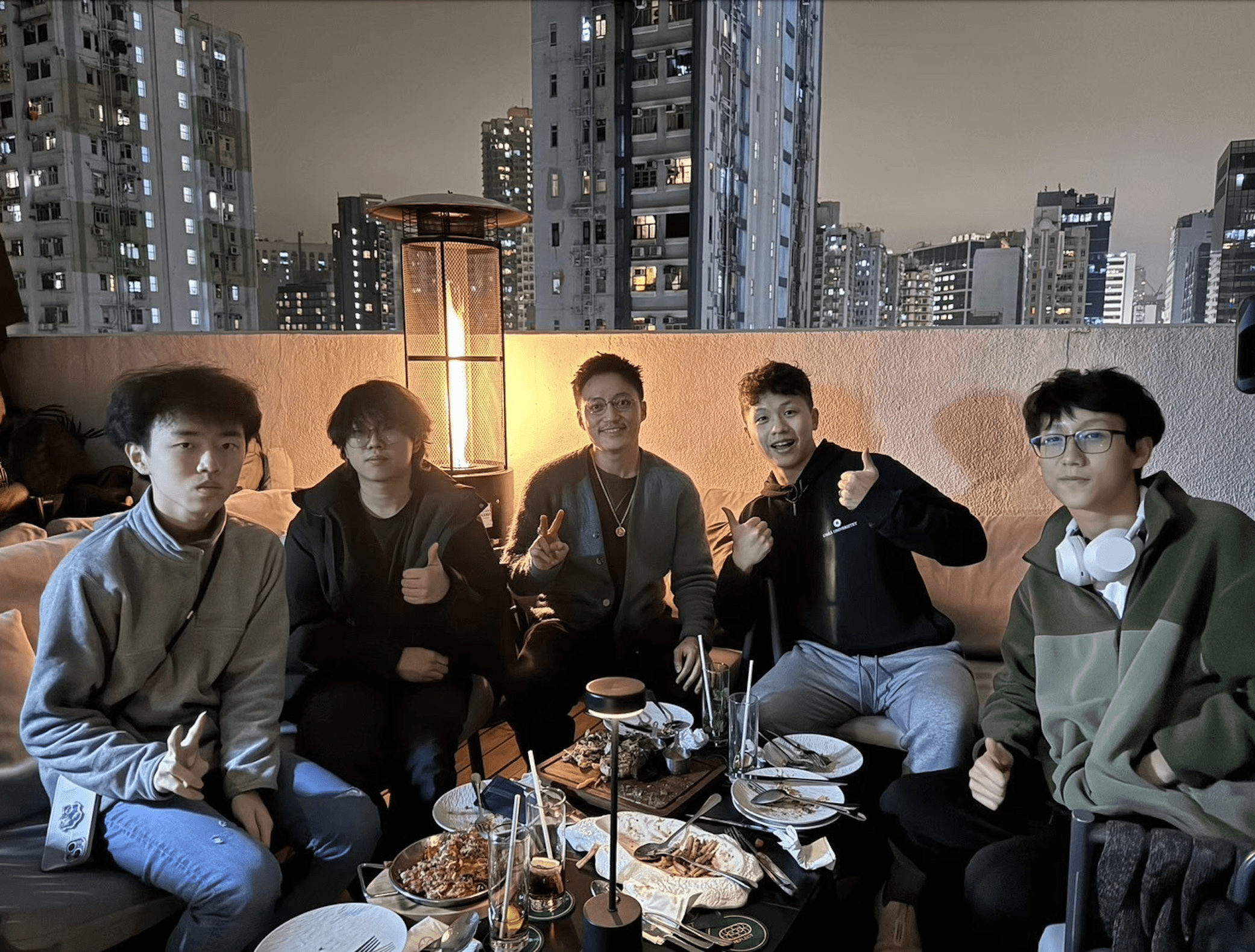
FIELD PHOTOGRAPH
李予信 is in the center of teh photo
INTERVIEW / HONG KONG
李予信
HONG KONG · FEBRUARY 2025
POLITICS / RULE OF LAW / CIVIL SOCIETY / DEMOCRATIC DEVELOPMENT
Our conversation ranged from the 2019 District Council Election and subsequent government responses to the National Security Law, civil society, NGOs, freedom of speech, government accountability, and Hong Kong’s constitutional development.
ELECTIONS · RULE OF LAW · CIVIL SOCIETY · ACCOUNTABILITY
VIEW FULL INTERVIEW →
What Complicated My Assumptions
WHAT I EXPECTED
I expected formal political structures—elections, laws, and constitutional arrangements—to provide the clearest explanation of how accountability functioned.
WHAT I OBSERVED
The institutional picture was more complicated than any single formal structure could explain. Political rules existed alongside changing forms of participation, civil society, legal interpretation, and public response.
WHAT PEOPLE TOLD ME
My interview raised questions about the political significance of the 2019 District Council Election, government responses, the legal boundaries surrounding national security, the role of NGOs, freedom of speech, and institutional accountability.
WHAT THE EVIDENCE SUGGESTED
I began to distinguish institutional design from institutional experience. Understanding governance requires asking not only what structures exist, but how laws are interpreted, how institutions respond to political change, and how people understand their own relationship with those institutions.
MY REFLECTION
“Institutions can be mapped on paper. Their meaning emerges in how people experience them.”